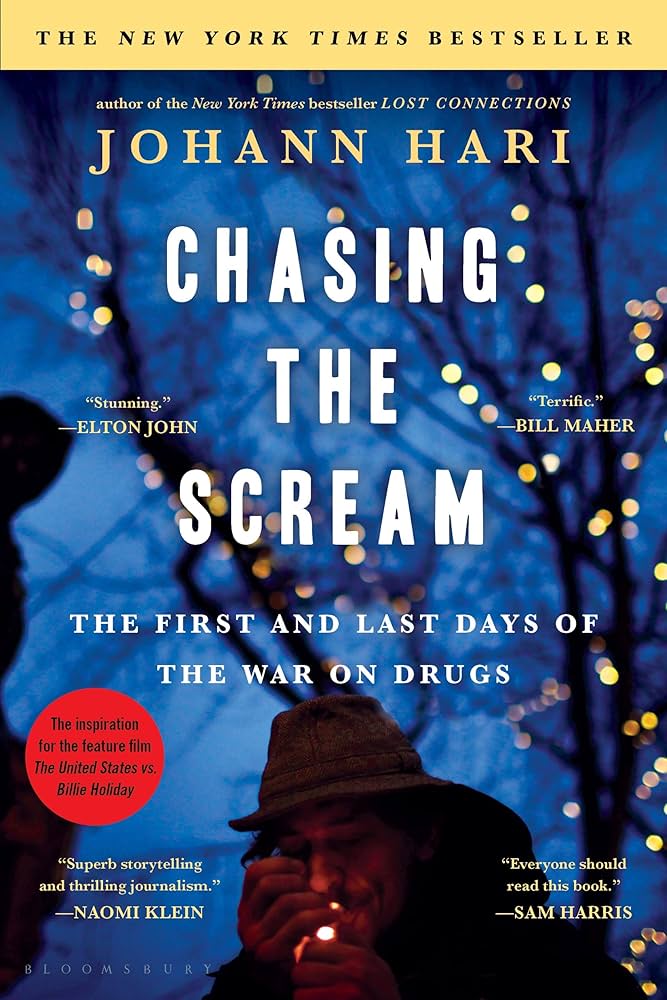
Johann Hari’s Chasing the Scream is both a history and a critique of the war on drugs. It’s not a detached policy manual but a narrative-driven exploration, built from stories of individuals who have lived through, shaped, or been broken by decades of prohibition. The book moves between the past and present, tracing the roots of drug laws while also asking how societies today might chart a better path.
One of the central figures is Harry Anslinger, the first commissioner of the U.S. Federal Bureau of Narcotics. Anslinger played an outsized role in creating the punitive drug policies that spread worldwide. His campaign against drugs often leaned on racial prejudice and sensationalism, linking drug use with crime, corruption, and moral decline. By anchoring his narrative in Anslinger’s influence, Hari shows how fear and stigma became the foundation of drug laws rather than evidence or compassion.
But the book isn’t just about politicians and policy. It also highlights the ways prohibition has shaped the lives of ordinary people. Billie Holiday’s story is one of the most striking. A groundbreaking jazz singer who struggled with heroin addiction, she was relentlessly targeted by Anslinger’s bureau, harassed even as she lay dying in a hospital bed. Her experience illustrates how punitive policies don’t just punish crime — they punish people, often those already marginalized.
Hari also connects prohibition to the rise of organized crime. Figures like Arnold Rothstein, a New York crime boss who helped invent the modern drug gang, emerge as products of a system where prohibition fuels underground markets. This is part of a larger theme: every attempt to eliminate drugs through criminalization seems to create new harms, whether through violence, unsafe supply, or the mass incarceration of people who use drugs.
Where the book gains momentum is in its exploration of alternatives. Hari points to countries and communities that have tried different approaches. Portugal’s model is the most prominent example: since 2001, it has decriminalized personal possession of all drugs, directing people toward treatment and support instead of jail. The results, according to public health data, have included fewer deaths, lower rates of HIV infection, and less stigma for those struggling with addiction. Similar experiments in Switzerland and Uruguay also get attention, suggesting that harm reduction and health-centered approaches can lead to more humane outcomes.
That’s not to say Hari presents a flawless argument. The book sometimes leans into dramatic language, and the line between advocacy and reporting can blur. Complex differences between substances — for example, casual cannabis use compared with heavy opioid dependency — aren’t always unpacked with the detail they deserve. But these limitations don’t erase the book’s larger value: it asks readers to re-examine deeply entrenched assumptions about drugs and the people who use them.
At its core, Chasing the Scream argues that the real question isn’t whether drugs are dangerous, but whether our current approach has made the dangers worse. For decades, the war on drugs has treated addiction as a moral failure or criminal act. Hari suggests we should see it instead as a matter of pain, disconnection, and health — one that requires compassion rather than punishment.
Whether or not readers agree with all of his conclusions, the book succeeds in forcing us to confront uncomfortable truths. Prohibition hasn’t delivered safety; it has often delivered more suffering. If we want to reduce harm, we need to listen to evidence, learn from other countries, and most of all, treat people as human beings rather than criminals.
 Horizon Recovery Initiative | Youth-Led Addiction Support